
Businesses resume, transport restored, daily wage earners breathe a sigh of relief
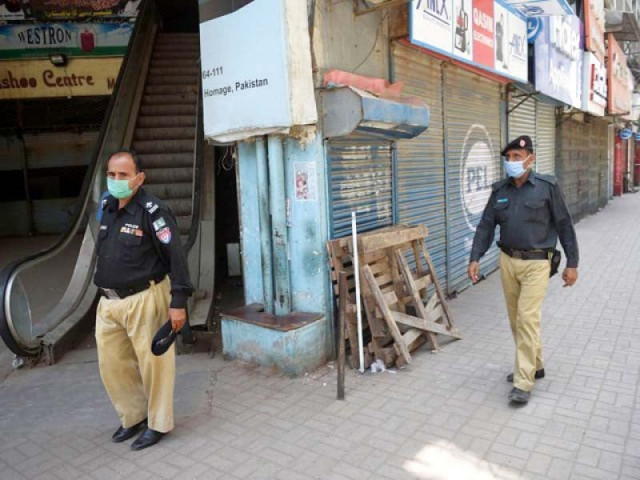
Police officers patrol a market in Federal Zone B during the micro-smart lockdown imposed in four towns in the city in January. Photo: file
RAWALPINDI:
After remaining closed for 12 days due to security arrangements related to Iran-US peace talks efforts in Islamabad, the twin cities of Rawalpindi and Islamabad have fully reopened, restoring normal life.
Transport services resumed, markets reopened and commercial activities immediately resumed, particularly in wholesale markets.
Residents of areas surrounding Noor Khan Chaklala Air Base, including Khanna Road, Shakrial, Islamabad Expressway, Shah Khalid Colony and Shah Faisal Colony, were allowed to return to rooftops, open windows and resume daily activities.
Hotels, restaurants, wedding venues and marquees have reopened, with bookings resuming for weddings and associated events. The reopening of transport terminals has allowed citizens to travel in and out of cities.
On Sunday, electronics markets, jewelry markets and workshops along Murree Road and Rawal Road opened for the first time after almost two weeks. Daily wage workers have also returned to work, bringing relief after days of financial hardship.
With the restoration of goods transportation, consignments of pulses, sugar and essential commodities from Faisalabad and Sargodha have started arriving in wholesale markets.
Metro Bus service has resumed and experienced overwhelming crowds on the first day. Universities and colleges reopened after online classes ended. Workers laid off during the transportation shutdown, including bus hostesses, drivers, conductors and laborers, are being recalled.
Traders, transporters and residents expressed satisfaction with the reopening, but sharply criticized the government for the closure.
Trader leaders Hammad Qureshi and Sheikh Waheed said traders suffered a lot without receiving any help from the government.
Sharif Qureshi called the closure unjustified, while Kamil Shah criticized the closure of educational institutions, questioning why local institutions were closed while those in war-torn countries remained open.


