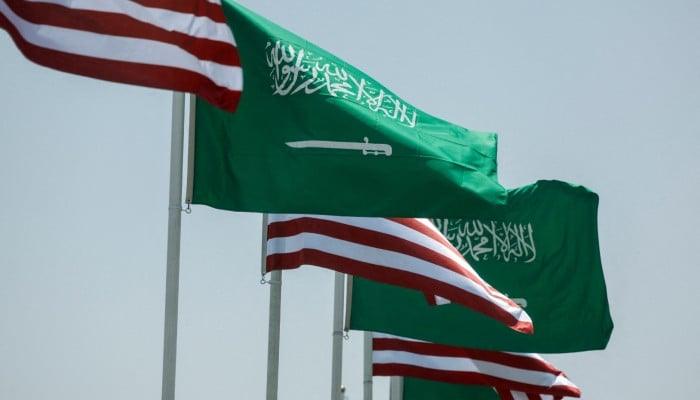
- The deal allows Saudi Arabia to build reactors using American technology.
- It allows the enrichment of uranium and the reprocessing of nuclear waste.
- The Compact does not include the IAEA Additional Protocol for Snap Inspections.
The United States and Saudi Arabia have reached a historic agreement on civilian nuclear energy, the US Department of Energy announced Wednesday, an agreement that allows the kingdom to build nuclear reactors using American technology and to enrich uranium.
A civil nuclear deal with Saudi Arabia has been in the works for years, both under the first administration of President Donald Trump and that of President Joe Biden.
However, no deal has been reached so far, in part because of warnings from nonproliferation groups that it could offer Saudi Arabia a path to developing a nuclear weapon.
Unlike the Biden plan, the current deal does not include an additional protocol that would allow the U.N. International Atomic Energy Agency to conduct intrusive snap inspections.
The deal would also allow Saudi Arabia to enrich uranium and reprocess nuclear waste, two potential paths to building a nuclear weapon. The UAE agreed to renounce both agreements when it signed a similar agreement with the United States in 2009.
US Energy Secretary Chris Wright and his counterpart Prince Abdulaziz bin Salman signed the agreement, known as Agreement 123, alongside a bilateral safeguards agreement, the US Department of Energy said in a statement.
The administration said the agreement was also consistent with nonproliferation agreements contained in the U.S. Atomic Energy Act, which are among the strongest in the world. Saudi Arabia has long argued that if it does not partner with the United States, it could partner with China or Russia, which have different proliferation standards.
The Energy Department said the deal now goes to Congress. Unless Congress gets enough votes to oppose the deal within 90 days of session, the deal will go into effect. However, he would need a two-thirds majority to override the presidential veto.
Some nuclear experts have called on lawmakers to reject the deal.
“We urge all members of Congress on both sides to recognize the risks and exercise their power to reject or modify Trump’s proposed nuclear deal with Saudi Arabia so as not to further open the door to nuclear proliferation in the Middle East,” said Kelsey Davenport, director of nonproliferation policy at the Arms Control Association.
The roughly 30-year deal to build the AP1000 reactors, worth tens of billions of dollars, would benefit Westinghouse, jointly owned by Canadian company Cameco and Brookfield Asset Management.
Make us all less safe
An industry source said the deal would require a feasibility study into using US technology in Saudi Arabia. The study and slow construction of nuclear power plants and uranium enrichment mean that building the infrastructure could take many years.
Saudi Crown Prince Mohammed bin Salman has repeatedly said he does not want the kingdom to build a nuclear weapon, but he would if Iran did, sparking concerns about possible proliferation. Several Democratic lawmakers have warned that the deal could trigger an arms race in the Middle East as the U.S.-Israeli war against Iran continues.
“They are allowing Saudi Arabia, a belligerent and authoritarian nation, to develop nuclear weapons technologies while starting a war with Iran under the guise of preventing an Iranian nuclear bomb,” said Democratic Senator Edward Markey. “This deal would make us all less safe.”
Republican Sen. Jim Risch said he agreed with the kingdom’s crown prince that the deal would benefit both countries.