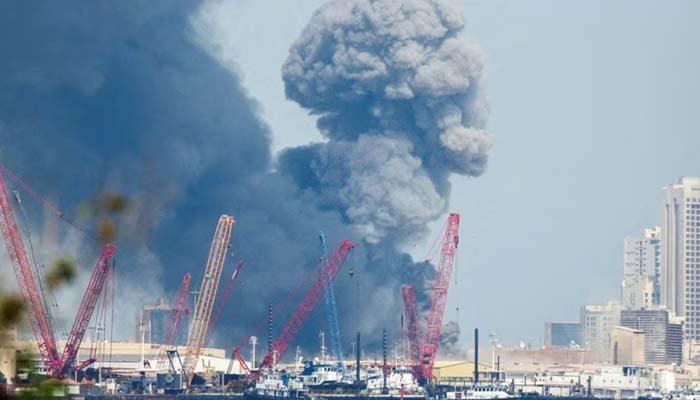
In a surprise decision, US President Donald Trump unilaterally suspended his daily strikes against Iran on Friday.
It is unclear what exactly prompted President Trump to end direct strikes on Iranian infrastructure and how long this so-called temporary ceasefire would last?
However, there are signs that this cessation of hostilities should not be overinterpreted.
After all, the Iranian blockade in the Strait of Hormuz is in full force.
On Saturday, central command neutralized two ships and redirected twelve others that failed to comply with orders into strategic waterways.
Despite recent discussions with Oman, Tehran also indicated that “no change has occurred in the transit situation across the strait.”
Additionally, the unannounced temporary ceasefire also came into effect as Iran claims to have killed more than two hundred US troops (not independently verified) and destroyed eleven US warplanes, including an F-15 and a number of helicopters and drones, during a fortnight of renewed fighting.
What Western experts admitted, however, was Iran’s high-speed, maneuverable re-entry missile technology that struck U.S. bases in Jordan and Kuwait while avoiding defense systems.
Meanwhile, Iran also claimed to have received aggravated threats from suspected separatist elements across the border provincial region of Erbil, Iraq.
On the other hand, Tehran has accused the United States of killing 55 of its citizens and injuring 629 others since June 27. He also accused the Pentagon of destroying a number of bridges, a train station and an airport. Which the Pentagon has refuted.
Simultaneously, Yemen’s Ansarullah also opened a major front. Their aggressive actions in the Bab al-Mandab Strait are putting pressure on the global supply chain.
The unilateral semi-ceasefire also came into play when pressure to convince Iran to accept the southern route between the United States and Oman in the Strait of Hormuz failed to produce results.
An attempt to mediate by the new Iraqi Prime Minister, Ali Falih al-Zaidi, also failed flatly.
Last week, Zaidi landed in Tehran after his first visit to the White House. In Washington, he was praised by President Trump as a “brilliant leader” who shared “tremendous chemistry.”
On the contrary, Iran has dismissed the need for more intermediaries by blaming the “irrational, expansionist and hegemonic approach of the United States” in resolving these problems.
After all, Qatar and Pakistan are already playing an active role since Oman has been marginalized.
With this in mind, experts believe that it is very likely that the current cessation of hostilities will only be used by the United States to recalibrate its war strategy.
They see the tense status quo in the strategic Strait of Hormuz as a major thorn.
“If President Trump was serious about ending the war, he could announce the opening of the naval blockade of Iran after he first declared a ceasefire,” said a diplomat who asked not to be named.
Tehran had made it known that it would not accept a blockade or allow the Strait of Hormuz to return to its pre-war state.
So where do we go from here?
Well, experts believe that this is a lull before a full-scale war. President Trump intends to “finish the job,” despite a Washington Post-Ipsos poll showing 68 percent of Americans believe “this war is not worth fighting.”
Maybe he’s right. Most Americans don’t care about their country’s foreign policy. They care more about credit cards charged at gas stations or to buy groceries.
It is obvious that they are paying out of their own pocket. The current average price of a gallon of gasoline has risen again to $4.1110 in the United States, which is not a good sign for Republicans campaigning for the midterm elections.
Will the outcome change the course of the war?
“It is very likely that the war in Iran will continue regardless of the results of the midterm elections,” said another diplomat.
“If the Republicans win, President Trump will seal it as an endorsement of his policies. If he loses, then there is nothing to lose. So it’s better to finish the job,” said the diplomat, who wished to remain anonymous because he was not authorized to speak on the subject.
The continued deployment of military personnel and assets to the region is cited as evidence to support this argument. Despite the negotiations and the memorandum of understanding, Washington and its allies also impose severe sanctions on Tehran.
The designation of the Islamic Revolutionary Guard Corps (IRGC) as a terrorist organization by the United States and the United Kingdom is another indication.
It is noteworthy that the IRGC is not only a military force but also the most powerful economic and political entity working under the leadership of the Supreme Leader. In retrospect, the entire Iranian governance system is blacklisted.
“And that is why the clouds of war will remain thick over Tehran.” concluded the diplomat.