
At a luncheon at his golf club in Jupiter, Florida, on the first Saturday in May, President Trump received criticism from a group of tobacco executives and lobbyists unhappy with how the Food and Drug Administration was regulating their industry.
Finally, Mr. Trump has heard enough. He interrupted the conversation to call Dr. Marty Makary, the FDA commissioner.
No response.
Furious, the president then called Dr. Makary’s boss, Health Secretary Robert F. Kennedy Jr., and another top health official, Dr. Mehmet Oz, head of the Centers for Medicare and Medicaid Services. He complained to them about the FDA’s regulations on e-cigarettes, according to three people briefed on the meeting and who were not authorized to discuss it.
The message has been received. Less than a week later, executives got what they wanted.
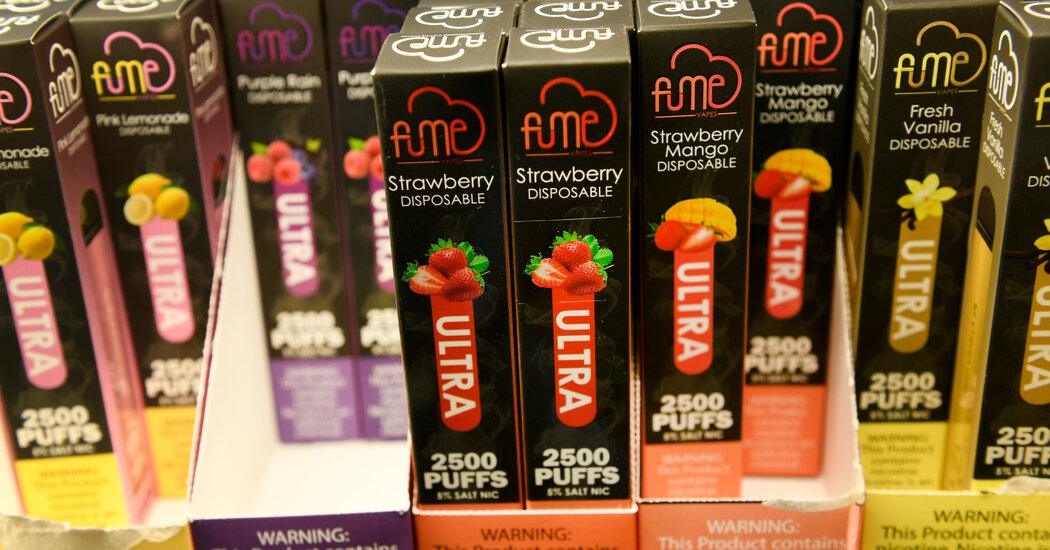
The FDA issued new guidance Friday that could pave the way for big tobacco companies to start selling flavored vapes and to trap part of the $6 billion e-cigarette market away from illegal Chinese competitors. The new policy bypasses the FDA’s usual rulemaking process.
In the week that followed, Dr. Makary continued to oppose the approval of flavored vapes as support from Mr. Kennedy and others collapsed around him. Department of Health and Human Services staff have begun drafting the new plan, according to two people familiar with the events.
On Tuesday, Dr. Makary resigned, telling his associates that he could not, in good conscience, remain head of an agency that supported such a policy.
Although there is no definitive evidence linking the new guidelines to donations or lobbying, this episode represents a clear turning point in the federal government’s long-standing approach to the tobacco industry.
Since the 1990s, when states won huge payments and other concessions from big cigarette companies as part of a nationwide legal settlement, the tobacco giants have backed down. Cigarette sales plummeted and regulations increased as consumers and administrations of both parties embraced a public health consensus on the dangers of smoking and nicotine addiction.
Mr. Trump’s first administration initially continued that trend, proposing new restrictions on cigarettes and banning flavored vapes amid concerns that their growing popularity could threaten the health of a generation of teenagers.
But since then, Mr. Trump has enthusiastically welcomed financial support from the tobacco industry and courted e-cigarette users as a political group.
The new guidelines on vaping highlight Mr. Trump’s willingness to use his executive authority to prioritize the causes of major corporate donors over public health concerns, taxpayer interests and the judgment of experts, including at times those in his own administration.
The president has developed close relationships with tobacco companies, including Altria and Reynolds American, which have donated millions of dollars to his political groups and projects, including his White House ballroom proposal. Their leaders attended the luncheon at the president’s golf club.
The Department of Health and Human Services, which oversees the FDA, referred requests for comment to the White House.
Kush Desai, a White House spokesman, said in a statement that Mr. Trump pushed to expand access to vapes to help Americans trying to quit smoking.
“The only guiding factor behind the Trump administration’s health policymaking is gold standard science,” Desai said.
Reynolds American and Altria did not respond to questions about their lobbying or the lunch conversation.
Participants included Jeff Raborn, a senior executive at Reynolds, as well as Phil Park and Todd Walker of Altria, according to people familiar with the matter. Also present were Brian Ballard and Rich Haselwood, lobbyists for the firm Ballard Partners, which represents Reynolds and helped organize a sophisticated and expensive influence campaign that resulted in the new vaping guidelines. Mr. Ballard is a top fundraiser for Mr. Trump. Mr. Haselwood was an in-house lobbyist at Reynolds before joining Ballard Partners this year.
A spokesperson for Ballard Partners declined to comment.
While public health experts view e-cigarettes as a less harmful alternative to tobacco-based cigarettes, the new guidelines bypass a scientific review process that the FDA previously defended before the Supreme Court. The skipped procedures were intended to ensure approval only of products featured in studies aimed at helping cigarette smokers transition to vaping without attracting a new generation of nicotine users.
The guidelines could also allow higher levels of nicotine in nicotine pouches. It includes a commitment to prioritize efforts to end the importation of illegal foreign vapes, an idea that has bipartisan support in Congress.
Taken together, these policy changes could help companies like Altria and Reynolds gain market share considered critical to the industry’s survival.
The market for vapes and nicotine pouches, such as Zyn, includes about 30 million people in the United States, the equivalent of the number of cigarette smokers. Even though the nicotine pouch market is growing rapidly, cigarettes still account for about $50.8 billion, or nearly 70% of annual U.S. tobacco sales, according to a Goldman Sachs research report. Vape sales are lagging behind competition from illicit products.
In recent years, the FDA has moved glacially in approving e-cigarettes, allowing only those with tobacco or menthol flavors, including some sold by Reynolds and Altria. Unapproved Chinese vapes have flooded into the United States, fueling a thriving illicit market with flavors like peach fudge and watermelon ice cream. Last year, industry executives said illicit fruit-flavored vapes accounted for 60% of the e-cigarette market.
When Mr. Trump attempted to return to the White House, some in the tobacco industry went all-in, hoping he would ease regulations on vapes and abandon the Biden administration’s plans to ban menthol cigarettes and crack down on other cigarette sales.
In some ways, Mr. Trump is an unlikely savior for the tobacco industry. He has never smoked, but he pledged during his 2024 campaign to “save vaping again.”
Through an affiliate, Reynolds, which is the largest seller of menthol cigarettes, donated $10 million to a super PAC supporting Mr. Trump’s campaign, according to campaign finance filings. There is no public record of donations from the subsidiary to groups supporting Mr. Biden or the campaign of former Vice President Kamala Harris.
Mr. Ballard, whose firm has received more than $4.4 million from Reynolds since the start of 2017, hosted a dinner for Mr. Trump during the campaign with Reynolds executives in New York, according to a person familiar with the interactions. The leaders urged Mr. Trump to oppose the ban on menthol cigarettes and expressed concern about Chinese vapes.
Reynolds executives, including Mr. Raborn and Mr. Haselwood, were such a presence around the campaign that Mr. Trump began calling them “my tobacco guys,” according to the person familiar with the interactions and a book co-written by a New York Times reporter and published last year.
When Mr. Trump won, the rest of the industry rushed to show their support.
Altria donated $1 million to its inaugural committee; the Vapor Technology Association donated $1.25 million; and a Philip Morris subsidiary donated $500,000.
During Mr. Trump’s second full day in office, his administration withdrew the proposed ban on menthol cigarettes, an initiative that the Biden administration had already largely abandoned. Mr. Trump’s team also shelved a Biden-era proposal to sharply restrict nicotine in cigarettes, an effort intended to speed the transition to a product known to be deadly.
Applauding the removal of the menthol ban, Billy Gifford, Altria’s chief executive, told investors on an April 2025 earnings conference call that “we expect this activity and momentum to continue.”
The courtship intensified.
Reynolds contributed another $3 million to another Trump-backed super PAC, while Altria and Juul each gave $1 million.
And Reynolds and Altria each contributed to the private fundraising effort to build a new ballroom at the White House. Mr. Raborn of Reynolds and Mr. Walker of Altria were invited to a White House dinner in October for donors who gave $2.5 million or more, as was Mr. Ballard.
Tadeu Marroco, chief executive of British American Tobacco, owner of Reynolds American, predicted to investors earlier this year that the Trump administration would crack down on illegal vapes, saying “the signs the new administration is giving to address this problem are very encouraging.”
The companies’ lobbying strategy has also extended to the states, where they are pushing for so-called “registration laws” — there are now more than a dozen, including Florida, Virginia and Pennsylvania. Many of these laws limit the sale of e-cigarettes to only those vapes on an FDA list.
Guidelines released last week indicated that such a list would be created.
Sheryl Gay Stolberg reports contributed.


