
April appears to be a lost cause for the Crypto Clarity Act, but a U.S. Senate committee hearing in May could keep the critical market structure legislation alive, provided it can reach a final vote by the full Senate by July, according to lobbyists and a lawmaker aide focusing on the market structure bill’s slow progress.
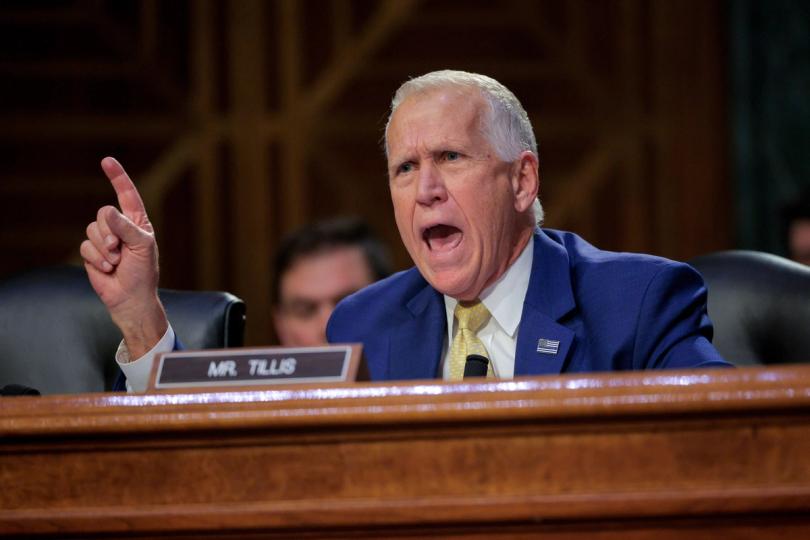
The legislative calendar is running out of room for this year, but a Senate aide told CoinDesk that another potential delay of a few weeks — allowing Republican Sen. Thom Tillis to finish discussions with bankers on stable coin yield issues — doesn’t yet push that work beyond the point of no return. The aide also said that prior negotiations over decentralized finance (DeFi) protections were effectively settled, leaving few other obstacles to committee approval.
One of the main issues facing the crypto industry (if it can overcome the stubborn obstacle of banking industry objections to stablecoin rewards) is that hearing from the Senate Banking Committee on the need to approve the bill would be just a first step among many.
Here’s the maelstrom of the timeline the effort is currently circled on: The Senate will essentially leave Washington in August and be in election mode until the congressional midterm elections in November arrive. He is currently scheduled to work in Washington for about a dozen weeks before the election, and he has pressing matters to attend to during that time, including the battle over funding the Department of Homeland Security, clashes over the war in Iran, the voter ID debate and handling nominations such as President Donald Trump’s pick to lead the Federal Reserve, Kevin Warsh.
If the bill finally manages to obtain approval from the Senate Banking Committee, the text will have to be merged with the version adopted by the Senate Agriculture Committee. This merger work provides the timing cushion that these current delays are eating away at, the aide said.
The final legislation would likely be revised further as lawmakers add their final compromise on an ethics element in which Democrats wanted to prevent high-ranking government officials (particularly President Trump) from profiting from crypto interests. The aide said language was now being circulated on this point, but it would not appear in the bank panel’s version and would be added later. If they can overcome that dispute and another demand to appoint a full slate of commissioners to oversee regulation of the markets, the bill could gain enough Democratic support to pass.
Then the House will have to approve it again, because it is very different from the version it already put forward last year. But it should go quickly, as long as new disagreements do not arise.
The last step, signing Trump, should be the easiest, although he introduced some uncertainty in March when he said he would not sign any bills until he approved legislation that would require voters to prove their citizenship before they could vote.
The Digital Asset Market Clarity Act, if approved, would become the second major crypto bill to become law, joining last year’s Guiding and Establishing National Innovation for American Stablecoins (GENIUS) Act. But it’s an unresolved GENIUS Act stablecoin issue that has delayed progress on the Clarity Act since the start of the year, as bank lobbyists gained enough support from senators to back up their concern that stablecoin rewards programs could be close enough to deposit returns, jeopardizing the banks’ business model.
The debate – a far cry from the central goals of the Clarity Act – has raged through interventions from the White House and harsh rhetoric from crypto insiders. Coinbase, which stands to take a major hit if stablecoin rewards programs are scaled back, has been at the forefront, and chief legal officer Paul Grewal posted on social media site X Tuesday about a new push.
“We cannot be for CLARITY and against rewards,” he wrote. “It’s one or the other. It’s time to choose.”
Although top Senate negotiators recently said they had an “agreement in principle” to move forward with a compromise, Republican Sen. Tillis told reporters that earlier hopes for progress in April were likely dissipating by May. The White House has leaned into the crypto position by allowing certain rewards that do not resemble interest on basic bank deposits.
“It’s hard to explain any new lobbying by banks on this issue as motivated by anything other than greed or ignorance,” said Patrick Witt, a top crypto advisor in the Trump White House, in his recent article on X. “Move On.”
In the current version, insiders say the compromise revolves around an approach that would prohibit yield payments on any product that looks or acts like insurance on a deposit, but it would still allow companies such as Coinbase to structure rewards programs that would be more akin to credit card incentives. But lawmakers have been reluctant to release text that could trigger new trading dramas, after letting representatives from the crypto industry and banking industry review the text last month.
“We are too close to let this effort fail,” Digital Chamber CEO Cody Carbone said in a statement to CoinDesk. “A markup must happen to move things forward. It’s been three months since it was originally planned, and given the progress on all issues, especially the bipartisan agreement on stablecoin yields, the time is right.”
Each day that passes without progress marks a diminishing chance of the Clarity Act’s eventual success. The very next action should be scheduling the hearing on the markup and sharing of the long-awaited legislation that negotiators are struggling over.
“In our opinion, the chances of CLARITY being signed into law in 2026 are approximately 50-50, or even lower,” according to a research note that crypto investment firm Galaxy plans to release this week. “The uncertainty does not come from an isolated problem but from the large number of unresolved questions which must be resolved successively within very tight deadlines.”
In other words, just one new outburst among negotiators could be a fatal delay, although the period after the November elections could offer a final, low-probability, last-chance opening. The so-called “lame duck” session of Congress at the end of the year may be a time when the outgoing Congress can still act, and more than one crypto insider has suggested that it’s not out of the realm of possibility that a hypothetical derailment of the Clarity Act could resurface then.
While crypto lobbyists are desperate for immediate action on legislation, the industry is playing the long game on the political front. Crypto PACs have already dedicated millions of dollars to continue adding to the list of their friends in Congress from both parties. Fairshake, the industry’s leading campaign finance arm, is careful to support members of both parties, and many of their political picks will reach next year’s Congress. If the Clarity Act passes by then, other pressing legislative issues will likely arise for the industry, including a tax overhaul and the creation of a federal bitcoin stockpile. .


