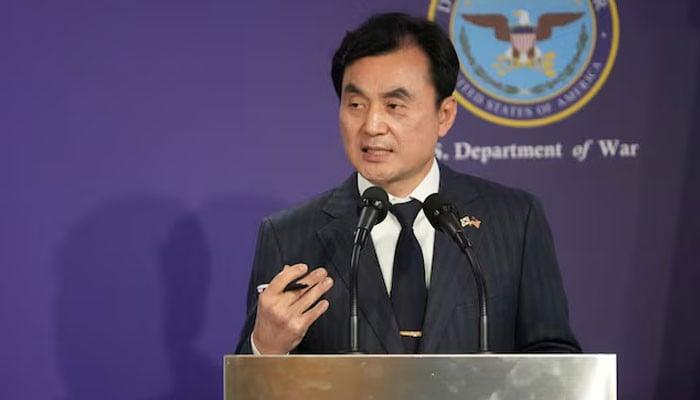
SEOUL: South Korea is considering a gradual contribution to efforts to ensure safe navigation in the Strait of Hormuz, Defense Minister Ahn Gyu-back said on Wednesday, signaling support measures up to military participation, Yonhap news agency reported.
Ahn told a news conference with South Korean media correspondents in Washington that he conveyed Seoul’s position in a meeting with U.S. Defense Secretary Pete Hegseth on Monday.
“We said at this level that basically we would participate as a responsible member of the international community and we would look at ways to contribute in a progressive way,” Ahn said, according to Yonhap.
Ahn said possible forms of progressive support could include expressions of political support, sending personnel, sharing information and providing military assets, while emphasizing that no detailed discussions had taken place on expanding South Korean troop participation.
“There has been no in-depth discussion on something like specifically expanding the participation of our military,” he said, adding that any decision will have to follow national legal procedures.
Attack on South Korean ship
The meeting between South Korean and U.S. defense chiefs came a day after Seoul denounced an attack on a South Korean-flagged ship near the Strait of Hormuz last week.
South Korea’s presidential office strongly condemned the incident, but said it was still investigating responsibility for the attack.
At the meeting, Hegseth said Washington expected its allies to “stand shoulder to shoulder” in the face of growing global threats, citing U.S. President Donald Trump’s authorization of what he called Operation Epic Fury as proof of the administration’s resolve.
He welcomed Seoul’s plans to increase defense spending and take greater responsibility for the security of the Korean Peninsula, calling them an example of the alliance’s burden-sharing.
Separately, Ahn told reporters that Hegseth expressed understanding of South Korea’s position on a conditions-based transfer of wartime operational control (OPCON) from the United States, and the goal of completing the transition as soon as possible.
According to Yonhap, Ahn also said the two sides exchanged views on other alliance-related issues, including plans to build nuclear-powered submarines.
He said there was no discussion during the negotiations about a reduction in U.S. forces stationed in South Korea or strategic flexibility for U.S. troops stationed in the country.