
Magazine says military leadership is key to access, discipline and networks to mitigate high-risk conflict
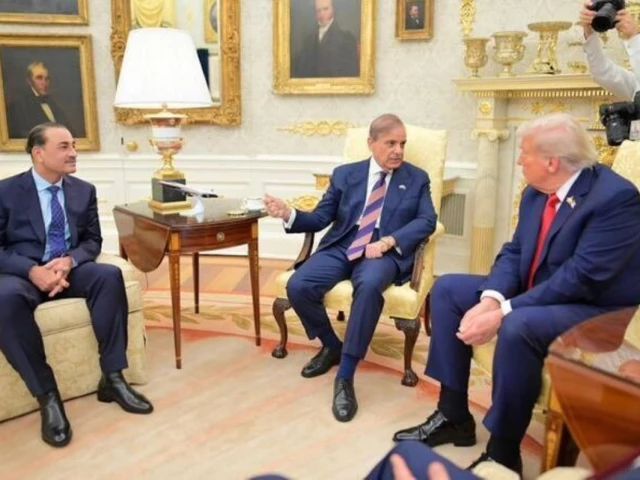
The article said that Pakistan’s military leadership also played a very important role in consolidating peace in the region. PHOTO: APPLICATION
As regional tensions continue to reshape the geopolitical landscape, Pakistan has firmly established itself as a critical player in international diplomacy, assuming the role of central mediator in the ongoing crisis between the United States and Iran.
In a recent article, the US-based company The national interest The magazine highlights the importance of Islamabad’s evolving role, noting that Pakistan’s military leadership was successfully navigating a complex and high-stakes diplomatic landscape. This shift marks a notable transition for Pakistan, moving it from the periphery of Middle East politics to a central player.
Since the beginning of the current regional conflict, Pakistan’s intervention has played a crucial role. In mid-April, under the leadership of Chief of Defense Forces and Chief of Army Staff Field Marshal Asim Munir, Islamabad facilitated high-level talks between senior US and Iranian delegations. The engagement, held in Islamabad on April 12 and 13, marked the first such direct meeting between senior officials of the two countries since 1979.
Learn more: Pakistan on the Rise: The Power of Mediation in a Global Conflict
Written by Canadian journalist Tanya Goudsouzian and Ibrahim al-Marashi, an associate professor at California State University, the article highlights the “non-kinetic potential” of Pakistan’s military leadership, which allowed the country to facilitate dialogue where conventional diplomacy had stalled.
Military leaders often possess unique capabilities, including direct access to foreign counterparts and the ability to discreetly engage with adversaries, that civilian institutions may lack.
The article notes that the country’s military leadership possesses the access, discipline and strategic networks necessary to support de-escalation in high-risk conflicts. It says Pakistan’s diplomatic clout is attributed to its ties with regional players, including China, Saudi Arabia, Qatar, the United Arab Emirates, Egypt and Jordan.
Former Foreign Minister Aizaz Ahmad Chaudhry, writing on the dynamics of modern diplomacy, noted: “Apart from economic and public diplomacy, military diplomacy has become an important part of the diplomatic toolbox. States today harness the non-kinetic potential of their armed forces to promote their foreign policy and national security objectives.”
This diplomatic clout is backed by a merit-based professional system that defines Pakistan’s military establishment. Ambassador Major General (retd) Tariq Rashid Khan highlighted in an interview that the armed forces operate under a “highly structured, transparent and rigorous career progression system”, providing consistency that enhances Pakistan’s credibility in the international arena.
CDF Munir’s recent diplomatic engagements – ranging from visits to Tehran to high-level meetings with the leaders of Saudi Arabia, the UAE and Qatar – have further strengthened Pakistan’s position. These efforts, including the mutual defense agreement signed with Saudi Arabia in September 2025, have effectively projected Pakistan’s influence well beyond South Asia.
Learn more: Pakistan continues its peace efforts
Even if the path to lasting peace remains complex, the efforts led by Pakistani leaders have constituted a constructive opening.
By leveraging its strategic relationships and military diplomacy, Pakistan has not only influenced the trajectory of current ceasefire efforts but has redefined its status as an indispensable partner for peace in a volatile and interconnected geopolitical zone.
The article argues that Pakistan is managing to fill a diplomatic void left by the weakening of traditional mediators, regional divisions and the limited effectiveness of international institutions.


