
- NASA’s AI medical tool works where Earth-based doctors simply can’t reach
- Deep space has no signals – so NASA built its own offline doctor
- RamaLama runs AI models the same way containers run software – predictably
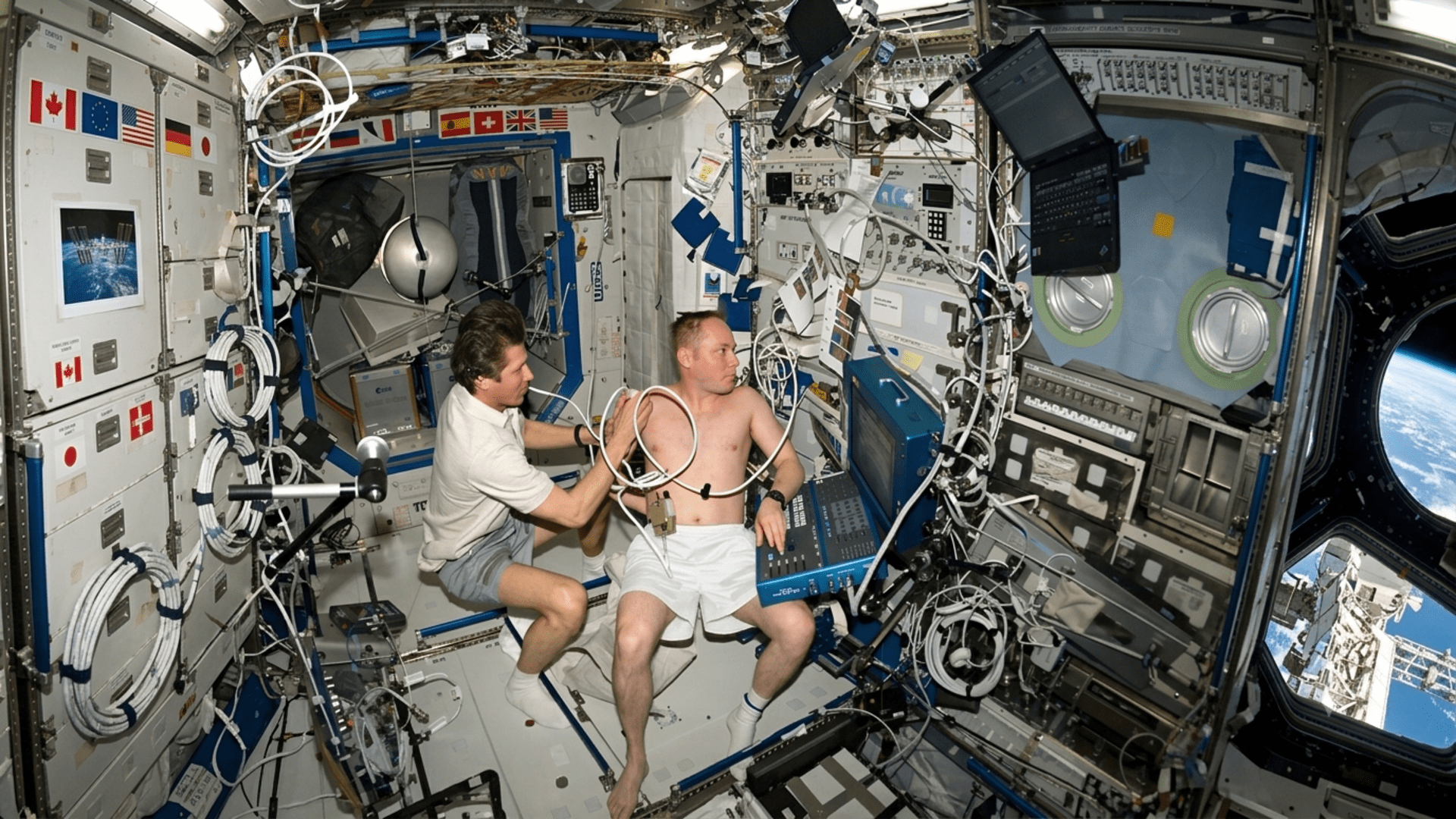
Astronauts aboard the International Space Station (ISS) currently rely heavily on Earth-based doctors whenever medical problems arise hundreds of miles above their heads.
This arrangement works reasonably well in low Earth orbit, where communication delays remain short enough to allow near real-time consultation sessions.
This becomes much less practical once crews travel beyond Earth’s orbit, where signals can take minutes rather than seconds to arrive.

An AI doctor designed to work without an internet connection
Researchers at NASA’s Johnson Space Center in Houston are currently testing a clinical decision support system called Crew Medical Officer Digital Assistant, or CMO-DA.
The system is designed to help astronauts diagnose and treat medical problems during deep space missions, where real-time communication with Earth-based doctors might be limited or completely impossible.
It is powered by RamaLama, an open source tool backed by Red Hat designed to simplify how developers run and serve AI models in various hardware environments.
According to Red Hat, RamaLama treats AI models like container images, running them in isolated, security-focused environments using Open Container Initiative-compliant containers that are portable and predictable across all hardware.
This approach allows CMO-DA to perform what the team calls multimodal inference: processing both large language models for complex medical reasoning and vision language models for image-based symptom analysis.
The system can therefore evaluate both written symptom descriptions and visual data without requiring any connection to a terrestrial cloud server.
This offline capability is not a practical feature but a mission-critical requirement, as communication delays in deep space make reliance on the cloud truly dangerous to crew health.
Testing is currently underway on HPE hardware – particularly the Earth-based twin of the space computer already aboard the ISS – providing researchers with a reliable Earth-based replica of the actual deployment environment.
Using open source tools, NASA researchers built a repeatable and verifiable system, which the team describes as essential for human safety in critical environments.
Ground tests at the ISS and beyond
Once the ground testing phase is complete, the CMO-DA will be presented to NASA leadership to evaluate further deployment aboard the International Space Station.
The next iteration of the system will integrate Red Hat Enterprise Linux AI, known as RHEL AI.
This is to provide a stable and solid foundation for scaling and managing containerized AI applications in remote and extreme environments.
RamaLama itself was built with the stated goal of making AI “boring,” that is, reliable, predictable, and unglamorous in the best possible sense for mission-critical applications.
The same architecture tested for astronaut health could eventually serve as a model for providing medical assistance to the most remote regions of Earth.
It is unclear whether the CMO-DA will ultimately evolve into something resembling the portable tricorder from Star Trek.
What is known is that an open source AI tool is already diagnosing symptoms on board a replica of the hardware currently orbiting Earth.
Follow TechRadar on Google News And add us as your favorite source to get our news, reviews and expert opinions in your feeds. Make sure to click the Follow button!
And of course you can too follow TechRadar on TikTok for news, reviews, unboxings in video form and receive regular updates from us on WhatsApp Also.


