
ISLAMABAD:
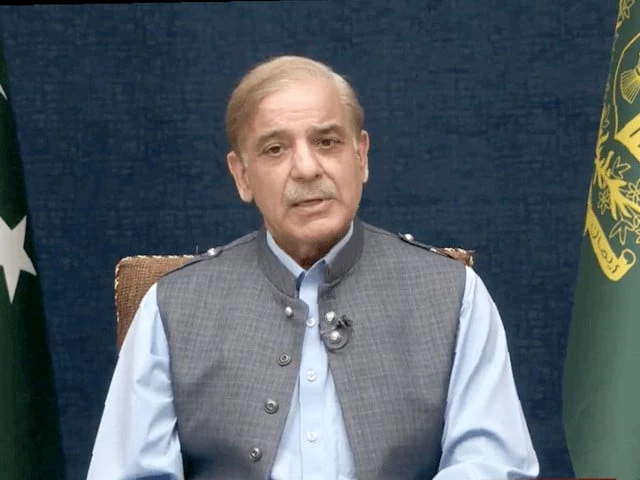
Prime Minister Shehbaz Sharif on Thursday called for concerted national efforts to transform Pakistan into an economic powerhouse, calling for the same level of dedication and resilience that allowed the country to achieve its status as a responsible nuclear state.
The Prime Minister, in his televised opening address to the federal cabinet meeting, highlighted that the government’s economic team had made collective efforts over the past two years, which were bearing fruit, ensuring stability and avoiding the need for rationing.
“It is a long and difficult journey. However, the nations that are committed to facing and overcoming their challenges are the ones that ultimately succeed,” he remarked.
Referring to the US-Iran conflict, he said that although a temporary ceasefire was currently in effect, the war had created significant obstacles for regional economies, including Pakistan.
Commenting on the first anniversary celebrations of Marka-e-Haq on May 10, he said that a year ago, Allah blessed the nation with greatness through the professional excellence of the armed forces and national unity.
“The armed forces, with their utmost courage, have taught the enemy a lesson which they will never forget,” the Prime Minister remarked.
Looking ahead to the upcoming Youm-e-Takbeer on May 28, the Prime Minister highlighted that the nation remembers this day as the time when Pakistan achieved impregnable defense in 1998.
He stressed that Pakistan’s nuclear assets were strictly for deterrence and defense, not offensive activities, earning the country global recognition as a responsible nuclear state.
Prime Minister Shehbaz paid rich tribute to the “heroes” of Pakistan’s nuclear adventure, specifically crediting Zulfikar Ali Bhutto for initiating the program and Nawaz Sharif for its successful conclusion.
He also praised the vital role played by scientists, politicians and national institutions in achieving this important milestone.
Referring to the martyrdom of Liaquat, a resident of Attock, who was martyred after confronting a suicide bomber, the Prime Minister said the government had posthumously conferred recognition on Sitara-e-Shujaat for his sacrifice.
The sacrifices made by Pakistan in the fight against terrorism are unparalleled, he stressed.
Wheat trade
Prime Minister Shehbaz Sharif, taking note of the problems faced in the purchase and sale of wheat across the country, constituted a ministerial committee on Thursday to take up the issue.
The federal cabinet meeting was held here under the chairmanship of Prime Minister Shehbaz Sharif.
During the meeting, the recommendations of the cabinet committee formed to review the Hajj policy 2027-2030 by the Ministry of Religious Affairs and Interfaith Harmony were also presented to the cabinet.
Approving the committee’s recommendations, the federal cabinet directed that an accountability mechanism be developed for the Ministry of Religious Affairs and private Hajj operators to ensure protection of the rights of pilgrims.
On the recommendation of the Ministry of Interior and Narcotics Control, the federal cabinet has approved the transfer of construction and development of a low-cost housing project in Farash town, Islamabad, for residents of Islamabad informal settlements (Kachi Abadis) to the Capital Development Authority (CDA).
On the recommendation of the Revenue Division, the federal cabinet approved the conduct of departmental promotional examinations for Pakistan Customs officers, including Customs Inspectors, Intelligence Officers, Preventive Officers, Assessing Officers and Assessing Officers, through the Federal Public Service Commission (FPSC).
The federal cabinet also approved the decisions taken at the meeting of the Cabinet Committee on Legislative Affairs held on April 29, 2026. However, the cabinet directed that the views of the Economic Coordination Committee (ECC) be sought regarding the amendments to the Tobacco Marketing Control Rules, 2016.
Waste-to-energy policy
Prime Minister Shehbaz Sharif on Thursday approved the formation of a waste-to-energy task force.
This working group will review the existing waste-to-energy framework and work to develop a new national policy in this regard.
The task force will formulate a national waste-to-energy policy aimed at promoting waste-to-energy projects in Pakistan through private sector encouragement, a clear strategy, institutional mechanisms and a comprehensive road map, said a statement issued by the Prime Minister.
Federal Minister for Power Division Sardar Awais Leghari will be the convener of the task force.
Federal Minister for Climate Change Musadik Malik, Minister of State for Finance and Railways Bilal Azhar Kayani, Federal Secretaries for Climate Change and Inter-Provincial Coordination, and Secretaries of Local Government, Climate Change and Energy Departments of the four provinces, Gilgit-Baltistan and Azad Jammu and Kashmir, will also be members of the task force.
Relevant representatives from the private sector were also included as members of the working group.
The working group will review Pakistan’s current waste-to-energy framework, review international best practices and identify legal, regulatory, financial and operational barriers in this sector.
Its terms of reference (TOR) also include the proposal of measures linked to legislative and regulatory reforms for waste-to-energy initiatives.
The task force will further recommend measures to facilitate investment, coordination and implementation of waste-to-energy projects in Pakistan.


