
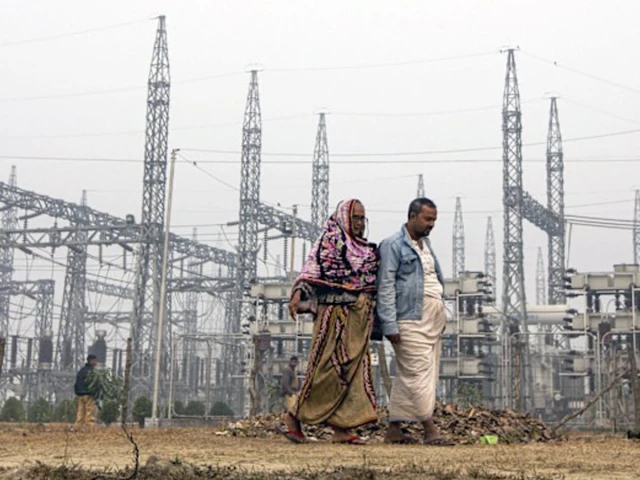
The Water Resources Division is the largest beneficiary with Rs103.80b, followed by Rs88b proposed for the Power division.
ISLAMABAD:
Ahead of the presentation of the federal budget for the financial year 2026-27, the government on Friday proposed a Federal Public Sector Development Program (PSDP) of Rs 1,000 billion as part of the broader budget of Rs 17,500 billion, according to official budget documents.
Under the proposed PSDP, Rs682.48 billion has been allocated to federal ministries and divisions, while the National Highway Authority (NHA) is expected to receive Rs224.51 billion.
The Water Resources Division is the largest beneficiary among federal entities, with a proposed allocation of Rs103.8 billion. The Power division (NTDC/PEPCO) follows with Rs 88 billion, while the Cabinet division has been allocated over Rs 64.8 billion.
The Higher Education Commission (HEC) is proposed to receive Rs46 billion, followed by the Railways Division with Rs40.65 billion and the Federal Education and Vocational Training Division with Rs36.31 billion.
A total of Rs233.33 billion has been earmarked for provinces and special zones, including Rs56.7 billion for merged districts and Rs85.02 billion for Azad Jammu and Kashmir (AJK) and Gilgit-Baltistan (GB).
The Information Technology and Telecommunications Division is expected to receive Rs19.58 billion, while Rs16.06 billion has been allocated to the National Health Services Division. The Interior division has been allocated Rs 21.82 billion and Rs 1 billion has been earmarked for new projects under CPEC 2.0.
The federal PSDP is proposed at Rs1,000 billion, while state-owned enterprise development expenditure is estimated at Rs2,218,000 billion, bringing the overall national development program to Rs3,669,000 billion.
Planning Minister Ahsan Iqbal said no new development projects would be launched in the next financial year except those related to defense and internal security.
Economic targets for fiscal year 2026-27
According to official documents, the government has set a gross domestic product (GDP) growth target of 4% for the 2026-27 financial year, while inflation is projected at 8.2%.
The services sector is expected to grow by 4.2%, industry by 4% and agriculture by 3.8%. In the agricultural sector, major crops are expected to grow by 3.6%, while other crops are expected to grow by 4.2%.
The government has forecast overall investment at 15% of GDP and national savings at 14.3%. Fixed investment is targeted at 13.3%, while private sector investment is expected to reach 10.3%.
Among agricultural subsectors, cotton ginning is expected to grow by 2.5%, livestock by 3.9%, forestry by 3.2% and fishing by 1.5%.
Growth in the manufacturing sector is targeted at 5.8%, including 4.5% in large industry and 7.2% in small industry.
Other sectoral targets include growth of 1.1% in electricity, gas and water supply, 2.2% in construction, 4.2% in wholesale and retail trade and 3.7% in transport and communications. The information and communication sector is expected to grow by 7.7%.
Financial and insurance services are expected to grow by 4.5%, while growth is forecast at 3.5% for real estate, 3.6% for education and 4.3% for human health and social work activities.
Federal budget
The government is set to unveil a massive consolidated budget of 17.5 trillion rupees (around $61 billion) for the 2026-27 financial year on Friday (today) to meet the International Monetary Fund’s strict austerity conditions.
The high-stakes spending plan balances fiscal tightening and IMF structural guidelines while introducing relief measures for poorer citizens and modest pay increases for civil servants. The budget comes as much of the population continues to feel the effects of the war between Iran and the United States, with no sign that the conflict is easing.
The government will propose measures to increase revenue and reduce spending while protecting the country’s poorest.
Under pressure from the International Monetary Fund to meet austerity conditions, Finance Minister Muhammad Aurangzeb will present to the National Assembly a delayed 17.5 trillion rupee ($61 billion) spending plan for the fiscal year starting next month.
Read also: The government will unveil a budget of Rs17.5tr
The budget has been formulated keeping in mind the challenges currently facing the economy on the domestic and international fronts.
Apart from fiscal management, the budget would include revenue mobilization, economic stabilization and growth measures, reduction in non-development expenditure, employment generation and people-friendly policies for the socio-economic prosperity of the country.
The burden of rising costs and taxes on fuel and electricity will fall largely on formally registered businesses and salaried workers, as politically powerful sectors such as agriculture, retail and real estate remain difficult to tax, experts say.
Policymakers must contend not only with the terms of the latest IMF bailout, but also with the outsized impact of the US-Israeli war against Iran – a conflict that Islamabad has sought to mediate.
The war-induced surge in oil prices brought inflation in Pakistan back to double digits just as the economy appeared to be finding its balance.
Business confidence was at its lowest in May since S&P launched its manufacturing survey last year, while input costs hit a 21-month high and employment fell for a second month.
Learn more: The economy shows resilience in the face of the consequences of the war in Iran
The central bank raised interest rates by a percentage point in April, its first increase in almost three years. The government is pressuring the Federal Board of Revenue to increase next year’s tax revenues to 37% above this year’s target – something the agency won’t miss.
The large unofficial economy keeps much of Pakistan’s cash beyond the reach of the FBR: only 1.3 percent of Pakistanis filed a return showing their taxable income last year, and only 7.7 percent of adults own a debit or credit card.
The number of filers has increased, but revenue has not kept pace. Corporate tax rates are already high by global standards, while an income tax increase would crush purchasing power still recovering from two years of inflation.
The budget should protect the poorest citizens by providing them with cash transfers. The government has not explained the one-week delay in presenting the budget.


