
- A Redditor Created a Tool to Let You Blind Test FLAC and Different MP3 Quality Levels
- Above all, you use your own music rather than samples you don’t know well.
- This humiliates a lot of audiophiles
In an effort to determine if they had the hearing skills to tell the difference between FLAC and MP3, a Redditor recently created a tool to allow you to do a “blind” listening test. It’s not the first tool for this, but it solves common problems with these tools, to make it easier to compare and contrast songs directly – and more importantly, you’re using your own songs, so you’re testing with tracks you know inside and out.
You download a FLAC and the tool will create MP3 copies at 16, 64, 128 and 320 kbps. You can then seamlessly switch between lower bitrates and the original, with the random labels not telling you which version you’re listening to. Changing won’t take you back to the start of the song, so you’ll be able to hear snippets in different streams.
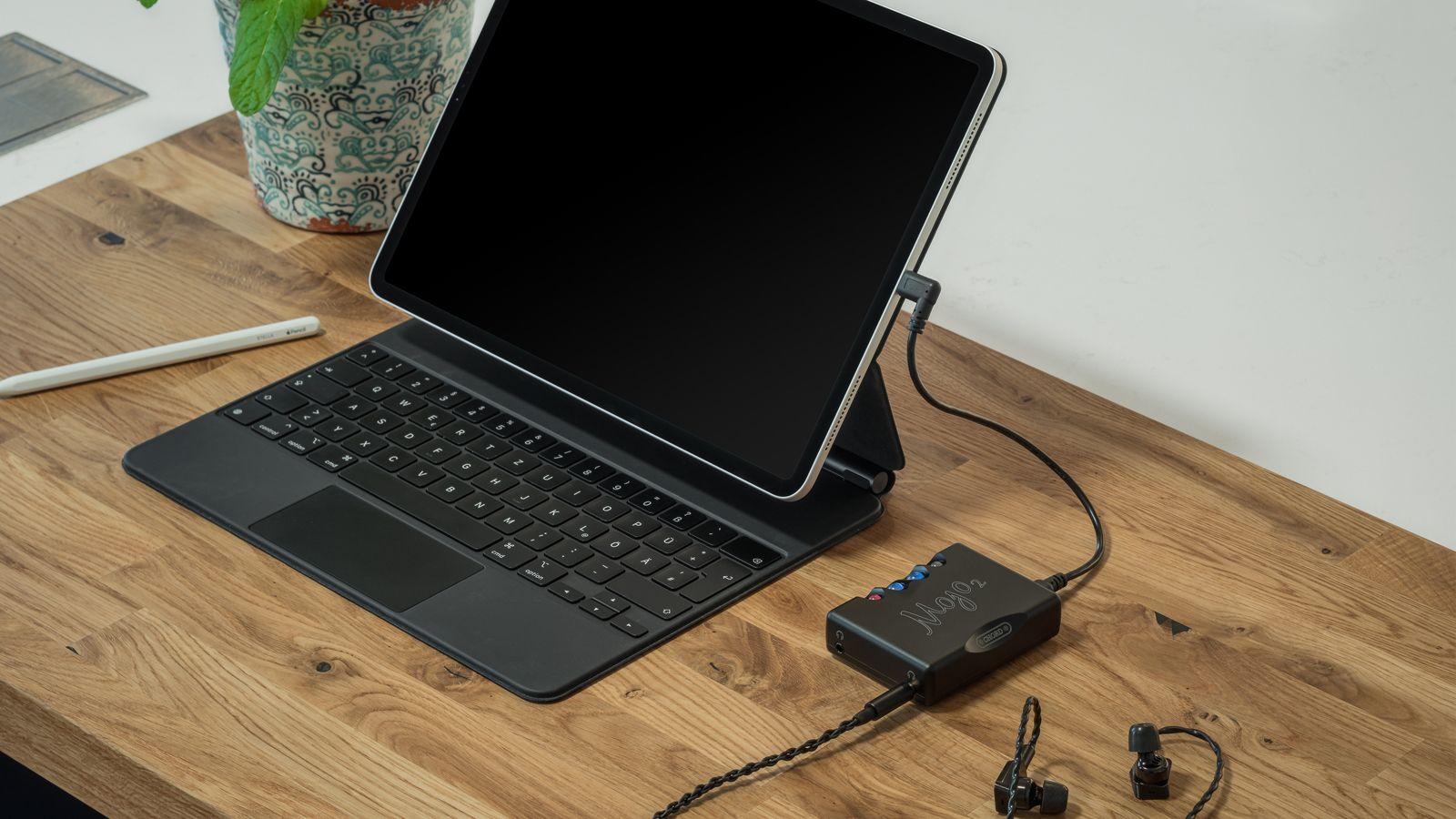
The tool does the rest, and everything is processed in your browser, so your data won’t be uploaded to the cloud or to anyone willing to sell it. Just note that you’ll actually need a lossless file to perform the test, and for best results you’ll want to output to a good DAC – either in a hi-fi system, powered speakers, or one of the best portable DACs and some of the best wired headphones.
Article continues below
But why am I talking? You can test the tool yourself by accessing it here. It’s free to use, although there is a donation link for the creator if you find it useful.
Do you hear a difference?
Most audiophiles will probably argue that they can still hear a difference between lossless and lossy, but this test might lead some to doubt their own ears. The owner himself jokingly said “turns out I’m deaf, I guess”, describing how they can’t hear the difference between 128 kbps, 320 kbps and FLAC.
The original poster isn’t the only one, with other users confirming they struggled to hear a difference. One poster simply said “this is very humbling,” communicating in four words what many other respondents took paragraphs to say.
Another commenter described running the test on $25,000 monitors and not being able to distinguish 320kbps files from lossless files.
As many point out, MP3 takes up less space than FLAC, making it ideal for space-conscious listeners.
This isn’t really breaking news. Audio engineers have long complained that the differences between higher quality compressed audio and lossless audio are indistinguishable. Famed producer Steven Wilson recently admitted that he can no longer tell the difference between CDs and high-res audio (although I should point out that none of the options in the comparison tool are as high quality as CD, which is around 1,400 kbps).
There are, however, many lossless defenses beyond audio fidelity. The posters point out that storing the highest quality FLAC files means you can easily convert them to other file types without introducing artifacts, because while you can convert lossless to lossy MP3, you can’t convert back and recover the information you lost.
So, for audiophiles, having your music collection in FLAC remains a safer choice, even if it consumes storage space. But this tool is a reminder that a good MP3 can still sound great, and even lossless in real terms.
And at the very least, he claims that 16kbps and 64kbps MP3s still sound like crap.
The best headphone DACs for every budget
Follow TechRadar on Google News And add us as your favorite source to get our news, reviews and expert opinions in your feeds. Make sure to click the Follow button!
And of course you can also follow TechRadar on YouTube And TikTok for news, reviews, unboxings in video form and receive regular updates from us on WhatsApp Also.


